codex-ui
为Web端提供Codex风格的界面与主题配色 适合喜爱Codex视觉风格、想要美化DSH Web界面的用户。
安裝
npx -p @deepseek-ai/dsh dsh plugin --profile web add github:rinDBeans/codex-ui說明文件
閱讀完整 README ↗
codex-ui
Codex appearance for DSH Web: window edges, sidebar divider, model menu, composer, theme colors




codex-ui is a community-maintained interface plugin for DeepSeek Harness (DSH), not an official DeepSeek AI product.
This plugin rebuilds DSH Web interface elements to match Codex: edge shadows and hairlines, the sidebar divider,
the model and reasoning-effort menu, composer structure, and the light and dark palettes.
Values come from Codex screenshots and its color picker, measured per pixel. The measurements and the source
images are in the sections below and in assets/reference/.
Host compatibility
Developed against DSH 0.1.7-rc.1 (npm global install) and 0.1.7-rc.2 (Windows desktop shell app.asar).
The verification scripts read shipped CSS straight out of app.asar; a host upgrade that changes structure fails their assertions.
Features
| Id | Content |
|---|---|
| ⑫ | Model picker: native trigger, opaque white menu, 28px rows, permanent check column, pending spinner |
| ⑬ | Composer header turned blank, panel buttons keep the official icons |
| ⑭ | Composer card: radius, shadow, geometry, tool row, hero layout |
| ⑯ | Right panel guide entries: no border, no fill, 52px rows, 20px icons, filled shortcut pills |
| ⑰ | Composer bottom controls: add button has no box until hover; model and permission controls share the hover chip |
| ② | Sidebar colors match the Codex light sidebar; sidebar rows align with the workspace list |
| ②c | Conversation window edge: 0.5px hairline plus a 24px ambient shadow |
| ②d | Right panel: hairline only on its left edge, shadow bleeds upward only; the dockkit 1px border is removed |
| ②e | Right divider handle: center-darkest gradient on hover |
| ⑱ | Settings card on the plugin manager's codex-ui bundle page: theme / accent / background / foreground / UI font / code font / translucent sidebar / contrast |
Screenshots
Light theme: conversation window edge and right panel.
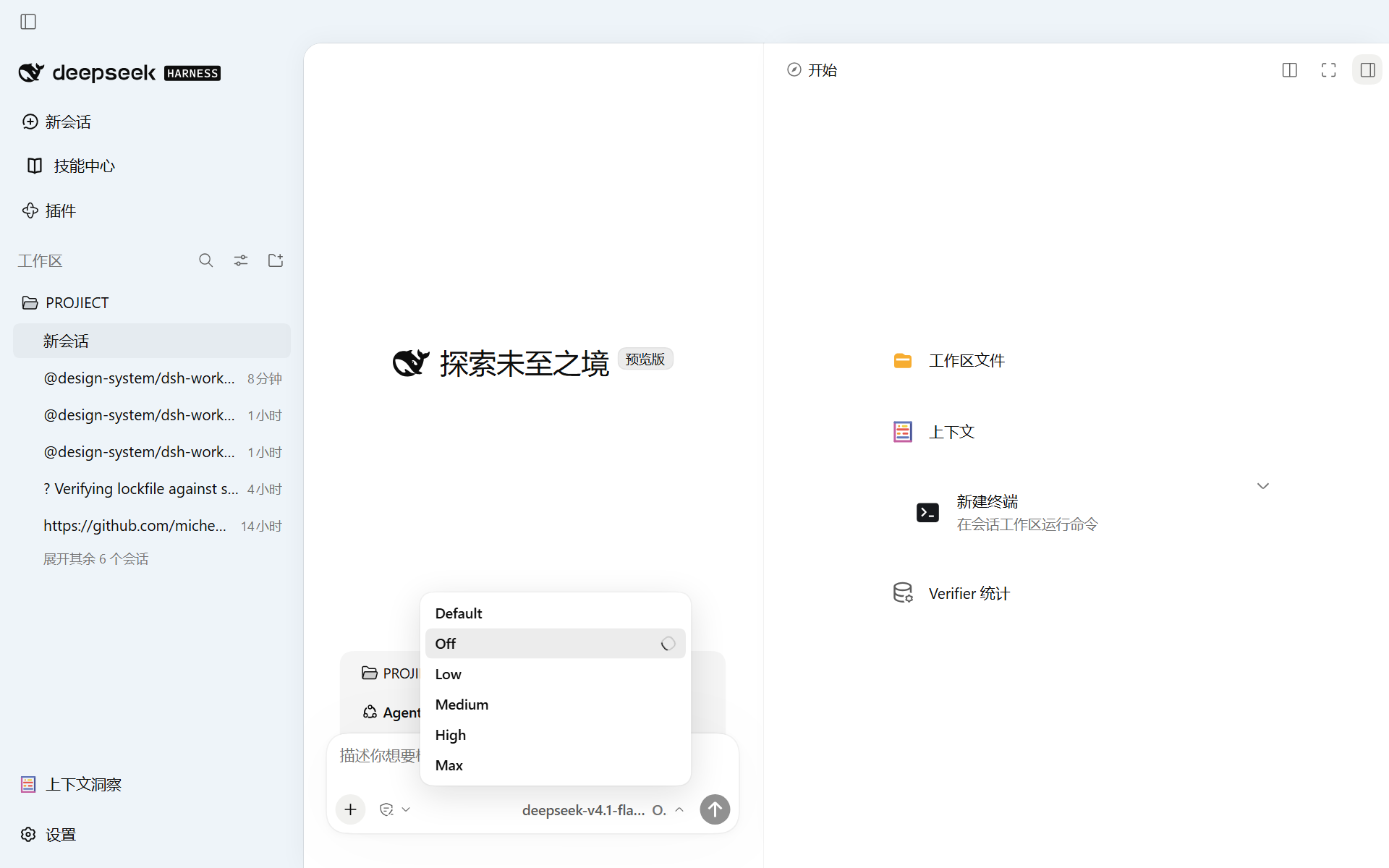
Composer bottom row: no box by default, a chip on hover.

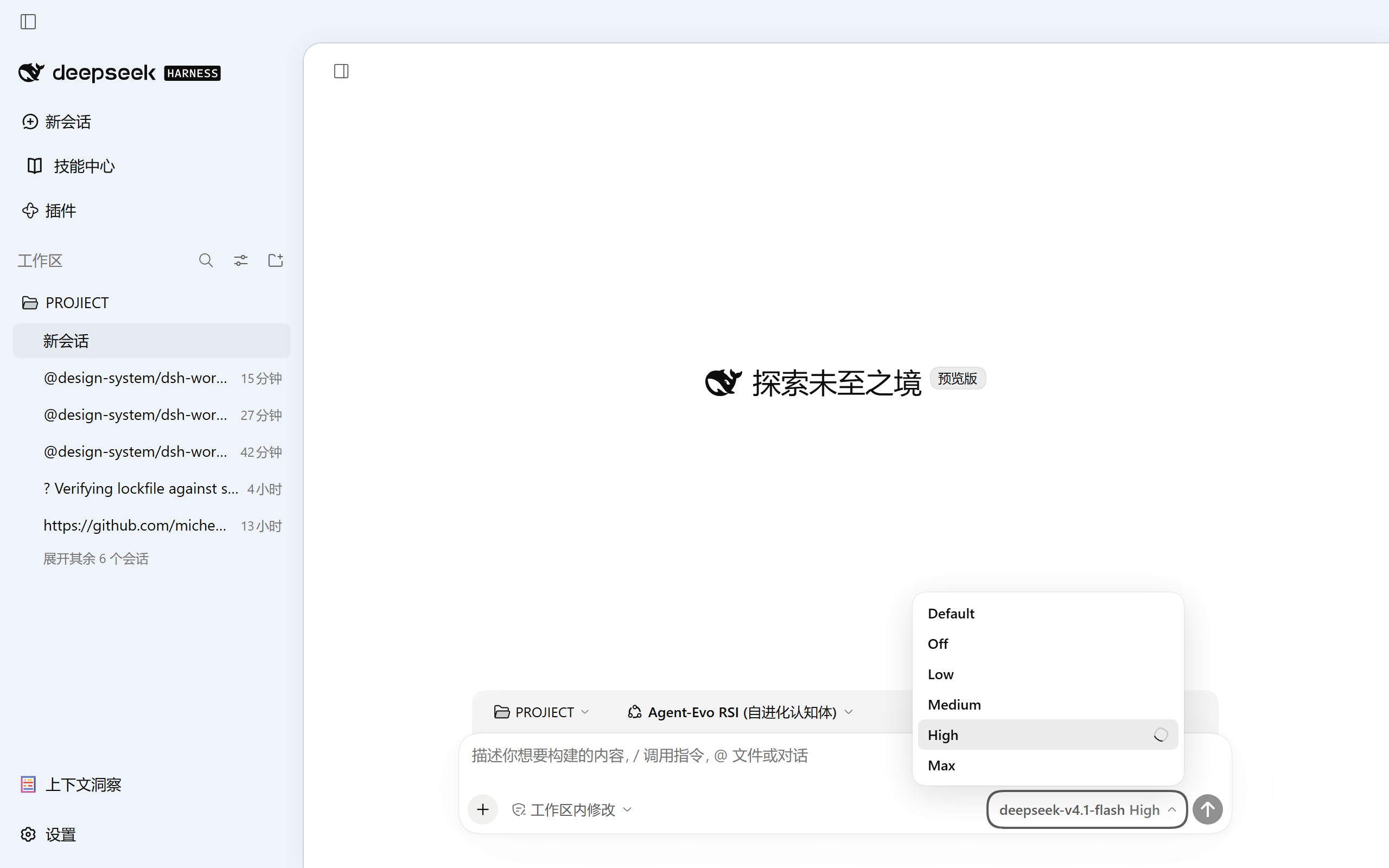
Model menu while a reasoning effort is being written.
Install
npm run install:web        # node scripts/install-plugin.mjs --write
npm run install:desktop    # desktop shell; restart the app afterwards
npm run build              # regenerate theme.css and client.js from skins/codex-ink

node scripts/install-plugin.mjs                              # dry run (web profile by default)
node scripts/install-plugin.mjs --bundle --write              # register through dsh.profile.bundles and drop the redundant insert
node scripts/build.mjs --check                               # report stale artifacts without writing
The installer scopes the six stylesheets in skins/codex-ink/ to html[data-codex-ui], combines them with
src/client.template.js (which inlines src/override.js and src/settings-card.js) into client.js, copies the
result to profiles//vendor/codex-ui, creates the node_modules/codex-ui junction, and keeps exactly one
registration path.
Never use both registration paths at once — two rows share the id and the market check disables the plugin:
| Path | How | Used by |
|---|---|---|
| bundle | the package name goes into the profile package.json dsh.profile.bundles; the package's own cordis.patch.yml inserts the entry | the desktop shell profile and the web profile (--bundle) |
| insert | a hand-written - insert: in the profile cordis.patch.yml | throwaway verification profiles that skip pnpm install |
The same stylesheets can be picked up by a skin loader:
node scripts/install-skin.mjs          # per-file SHA256 check against $DSH_HOME/skins/codex-ink
node scripts/install-skin.mjs --write  # overwrite on drift
Layout
| Path | Content |
|---|---|
index.js cordis.patch.yml package.json | Host half and manifest |
src/client.template.js | Browser half template (stylesheet, override layer, settings seat) |
src/override.js | Override-layer pure functions (no DOM; unit-tested by the repo checks) |
src/settings-card.js | The config card on the bundle page (inlined into client.js at build time) |
src/build.mjs | Scoping and artifact generation; the only implementation |
theme.css client.js | Generated from skins/codex-ink/ by src/build.mjs |
skins/codex-ink/ | Stylesheet sources (skin.css / patches.css / sidebar-align.css / window-shadow.css / composer.css / settings.css) |
docs/ | Plans and decisions |
scripts/build.mjs | Regenerate the artifacts; --check compares without writing |
scripts/check-repo.mjs | Host-free repository checks; the CI entry point |
scripts/host-paths.mjs | Resolves app.asar, the global @deepseek-ai modules and Chromium |
scripts/install-plugin.mjs scripts/install-skin.mjs | Installers |
scripts/*-verify.mjs scripts/live-gui-probe.mjs scripts/settings-page-verify.mjs | Fixture verification and live probing |
scripts/make-verify-profile.mjs | Builds a throwaway verification profile: plugin manager enabled, only this plugin, no existing profile touched |
assets/reference/ | Codex reference images |
assets/screenshots/ | Verification output |
.github/workflows/ci.yml | CI |
Verification
| Command | Coverage | Requirement |
|---|---|---|
npm run check | Syntax, JSON, manifest, artifact sync, encoding, docs pairing, machine-specific paths | none |
node scripts/audit-codex-ink.mjs | Skin structure, 36 WCAG pairs, color whitelist | none |
node scripts/model-picker-verify.mjs | ⑫ and the pending indicator, 18 assertions | none |
node scripts/rightbar-verify.mjs | Shadow layer, right panel, both dividers, 42 assertions | none |
node scripts/sidebar-align-verify.mjs | Sidebar column alignment, 6 assertions | none |
node scripts/hero-verify.mjs | ⑬ ⑭ ⑰ and the focus ring, 8 assertions | none |
node scripts/live-gui-probe.mjs --url | Real GUI: 10 assertions on shadows, both dividers, the model menu pending window | a running dsh web |
node scripts/settings-page-verify.mjs --url | Real GUI: the card on the bundle page, its 8 rows, no override at defaults, switch and accent writes, survival across a reload — 22 assertions | a running dsh web with the plugin manager enabled |
node scripts/theme-flash-probe.mjs --url | Per-frame sampling of the effective backdrop during theme and page switches (first opaque ancestor background); reports frames belonging to neither end of the transition (measured: 9 windows, ~720 frames, 0 anomalies) | same as above |
npm run check needs no host. The five fixture suites run locally: they need shipped CSS from app.asar plus a DOM
rebuilt from the render code, read with getComputedStyle. Fixtures have no title bar, no real AppFrame grid and no
real RPC, so the shadow layer, divider hover and pending feedback are verified by the live probe.
Host paths
The verification scripts read the host they run against. Each path is resolved in this order:
DSH_ASAR,DSH_GLOBAL_MODULES,DSH_CHROME;scripts/host.local.json, a gitignored per-machine file, for example{ "asar": "D:/.../resources/app.asar" };- a scan of the standard install locations, Playwright's browser cache and
npm root -g.
No machine-specific path is committed.
dsh --profile web --port 3099 --no-open      # prints a token URL
node scripts/live-gui-probe.mjs --url "http://127.0.0.1:3099/?token=..." --dpr 1.5
The probe opens a new conversation before timing the pending window, and exits non-zero if an assertion fails. The token expires; after about half an hour requests return 401 and a restart is needed.
Settings page
The config card on the plugin manager's bundle page (slot plugins.bundle.config, keyed by the package name
codex-ui). In the desktop app: sidebar Plugins → Installed → codex-ui → the card on that page.
Changes apply immediately; no restart needed.
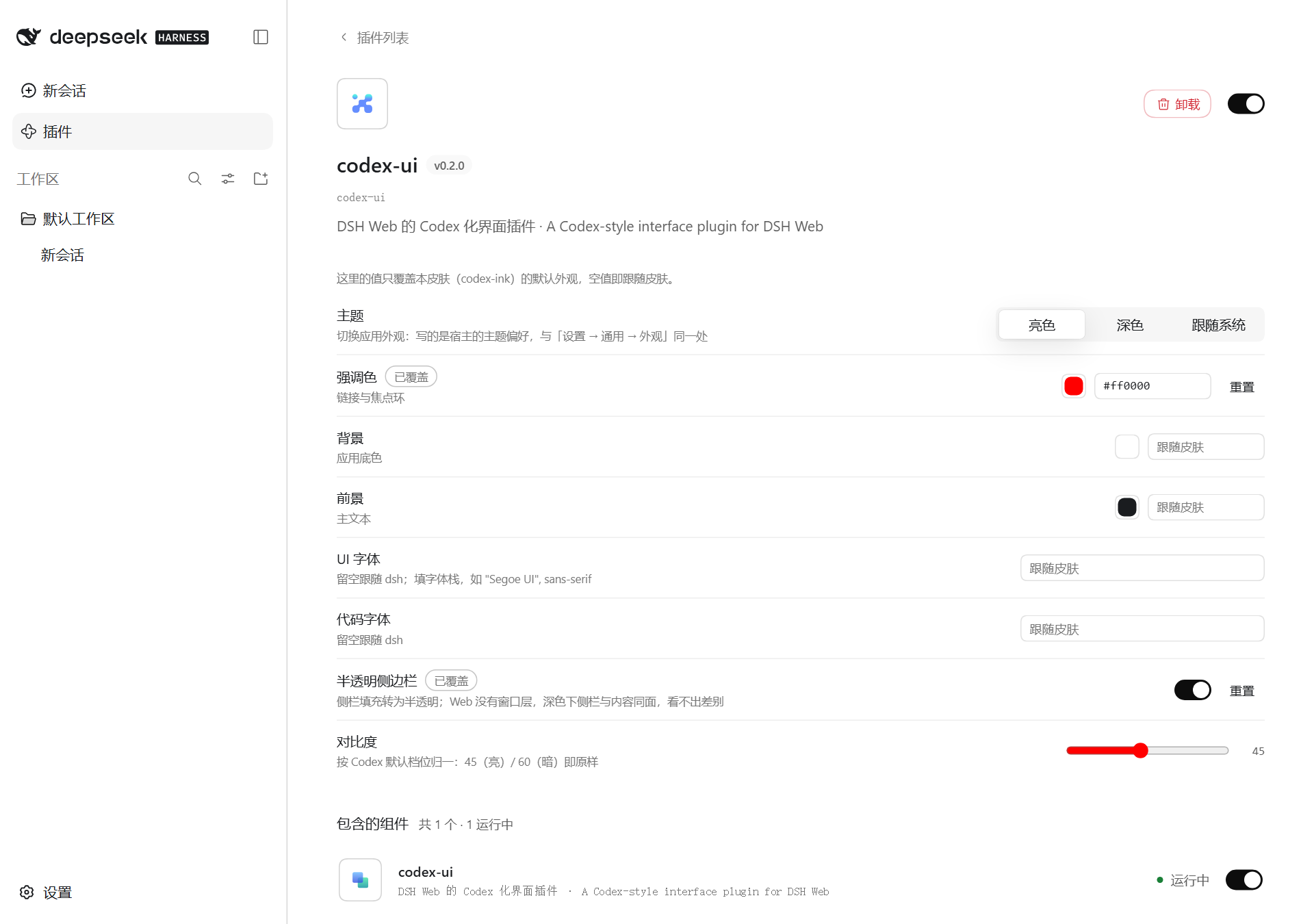
The same card in dark (after switching the theme the three colour rows edit the dark variant, and contrast shows the dark default, 60):
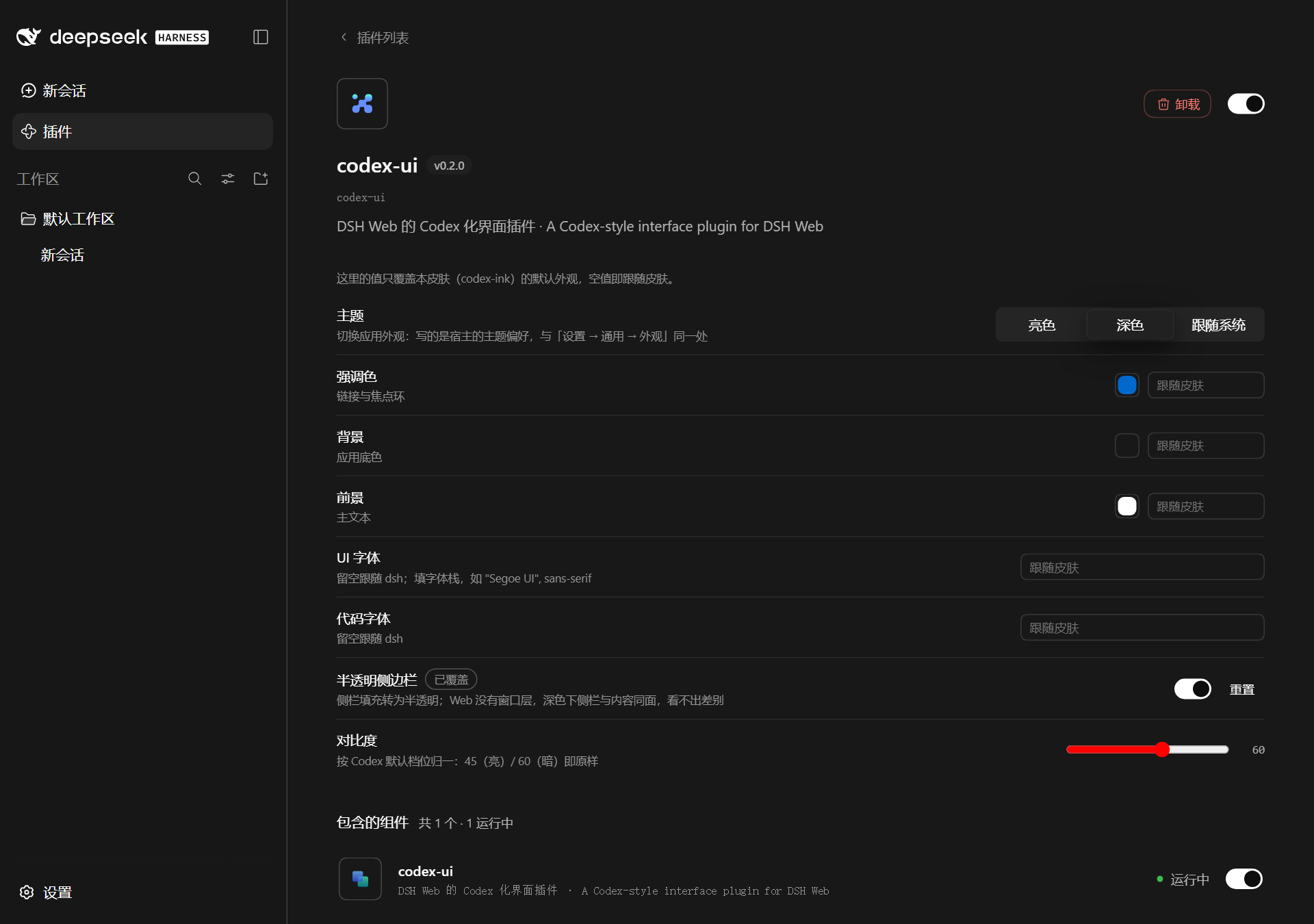
| Row | Config field | Default | Lands on |
|---|---|---|---|
| Theme | — (writes the host ui-theme preference) | System | ctx.theme.setTheme(): switches the whole app, the same setting as Settings → General → Appearance |
| Accent | accentLight / accentDark | empty = follow skin | --dsw-alias-link, --dsw-codex-focus |
| Background | surfaceLight / surfaceDark | empty | --dsw-alias-bg-base |
| Foreground | inkLight / inkDark | empty | --dsw-alias-label-primary |
| UI font | fontUi | empty | --dsw-font-family |
| Code font | fontCode | empty | --ds-font-family-code |
| Translucent sidebar | translucentSidebar | off | sidebar fill and row fills become translucent |
| Contrast | contrastLight / contrastDark | 45 / 60 | text tiers and the neutral alpha ladder |
- The theme row is not card-local view state: it writes the host's
ui-themepreference, the same setting as Settings → General → Appearance — the whole app switches and it survives a reload. The three colour rows below edit the variant currently in effect (active.colorScheme). - It does not go through
theme.setTheme(): that path publishes optimistically first and is then re-read from the settings document byadopt(), so on a slow round trip it draws new → old → new, which reads as "black → white → black". The card writes the preference into the theme plugin's own settings document instead (the same namespaceui-themeand fieldpreferencethe service's internalhost.setuses), leavingadopt()as the only publisher — one click, one publish. The control keeps a local pending value so it still feels immediate, and an unaccepted write falls back to the service entry point. That 0.8s round trip is not left empty: the browser half carries a local preview — the target theme is applied the moment you click (writing exactly the two things the host writes itself:body[data-ds-dark-theme]and thecolor-schemeonhtml), then handed back idempotently whentheme/changearrives with the same result. If the confirmation does not arrive within 2.5s, the preview rolls back to the truth. Measured click → colour change: 824ms → 22ms (median), with the run sequence still two runs (light×n → dark×m) and no double publish. - All 11 fields are
.volatile(): the settings service only projects volatile fields, and that is exactly how the plugin manager knows the entry — noConfig, no card. - Empty means no override: at the defaults the override layer emits an empty string and
data-codex-ui-themenever appears, so an untouched install looks byte-for-byte like 0.1.x (a repo check asserts this). - Overrides live in one runtime `` whose selector carries one extra attribute (specificity +1), so sheet order
does not matter and
skins/*.cssis never touched. - Instant write, no save button; text inputs commit on Enter or blur and every write is read back to confirm it landed; overridden rows show a badge and a Reset control.
- The contrast slider is a documented simplification: the app lerps text towards ink in linear RGB and raises the ramp by a constant; here the text tiers are mixed in the same direction and the hairline/neutral-tone family is scaled (clamped to 0.5×–2×). Colored state and diff fills are excluded so the palette never leaks into the override layer.
- The translucent sidebar has no window layer to reveal on the web, and in dark the sidebar shares the surface colour, so it is invisible there — the switch therefore also turns the sidebar row fills translucent, otherwise it would be
- The skin paints the canvas itself:
htmlandbodyboth carry this skin's base colour in either theme (htmlfollows through:has(body[data-ds-dark-theme]), because the host stamps the theme marker onbodyonly). Transitions are suppressed for the two frames after a theme change (html[data-codex-ui-switching] *, set by the browser half onctx.on('theme/change')). Both prevent a flash: the first closes the "nobody painted the canvas this frame" hole that would reveal the host's default backdrop, the second stops the whole page from cross-fading. completely silent in dark. Recorded as a gap, not presented as an equivalent.
Measurements
Window edges
assets/reference/codex-app-reference-1x.png (1901x1107, DPR 1):
| Location | Scan | Value |
|---|---|---|
| Conversation window, left edge | y=600 | x=340..355 ramps 238,241,247 to 231,233,239; x=356 is a single pixel 212,215,221 |
| Conversation window, top edge | x=800 | y=30..45 ramps 237,242,247 to 232,237,242; y=46 is a single pixel 214,218,224 |
| Right panel, left edge | y=600 | x=1437 is a single pixel 237,237,237, both sides pure white |
| Right panel, top edge | x=1700 | y=46 is a single pixel 213,218,224 with the same ramp above |
In both reference images the hairline is one device pixel, so the stylesheet uses 0.5 CSS px: at the 150% scaling of this machine, 1px rasterizes into two device pixels.
| Target | box-shadow |
|---|---|
| Conversation window | 0 0 0 0.5px var(--dsw-alias-border-l2), 0 0 24px rgba(13,13,13,.05) |
| Right panel | 0 0 0 0.5px var(--dsw-alias-border-l1), 0 -12px 24px -12px rgba(13,13,13,.05) |
Theme colors
Source: assets/reference/codex-theme-light.png and codex-theme-dark.png (the Codex color picker).
| Role | Light | Dark | Token |
|---|---|---|---|
| Accent | #339CFF | #0169CC | --dsw-alias-link |
| Background | #FFFFFF | #181818 | --dsw-alias-bg-base |
| Foreground | #1A1C1F | #FFFFFF | --dsw-alias-label-primary |
| Hover fill | #F2F2F3 | rgba(255,255,255,.08) | --dsw-codex-hover-fill |
The light values come from the color picker screenshot codex-theme-light.png. Since 0.2.0 the dark values come from
the app's own defaults (the jdi object inside resources/app.asar: surface #181818, ink #ffffff,
accent #339cff) instead of the picker. The dark link stays on the app's text-link token #0169CC.
The dark ramp rises from #181818: sidebar #181818 (the same face as the surface, separated by the 0.5px hairline),
layer 1 #212121, layer 2 #282828, layer 3 #303030; the alpha family moved from rgba(252,252,252,·) to
rgba(255,255,255,·) (the app's dark --alpha-base is #fff).
Sidebar colors
Source: point samples from assets/reference/codex-sidebar-reference.png.
| Token | Value |
|---|---|
--dsw-alias-bg-sidebar | #eef4f9 |
--dsw-specific-sidebar-fill | #eef4f9 |
--dsw-specific-sidebar-nav-item-active | #e2e9ed |
--dsw-specific-sidebar-nav-item-hover | #e8eef3 |
Limits
- Fixture checks are not signed-in screenshots. The
dsh weblaunch token has a lifetime and lives in process memory only. - In headless mode only the foregr