@xmanrui/dsh-feishu
DeepSeek Harness plugin for multi-bot Feishu setup and streaming chat
安装
npx -p @deepseek-ai/dsh dsh plugin --profile web add github:xmanrui/dsh-feishu说明文档
阅读完整 README ↗dsh-feishu
中文
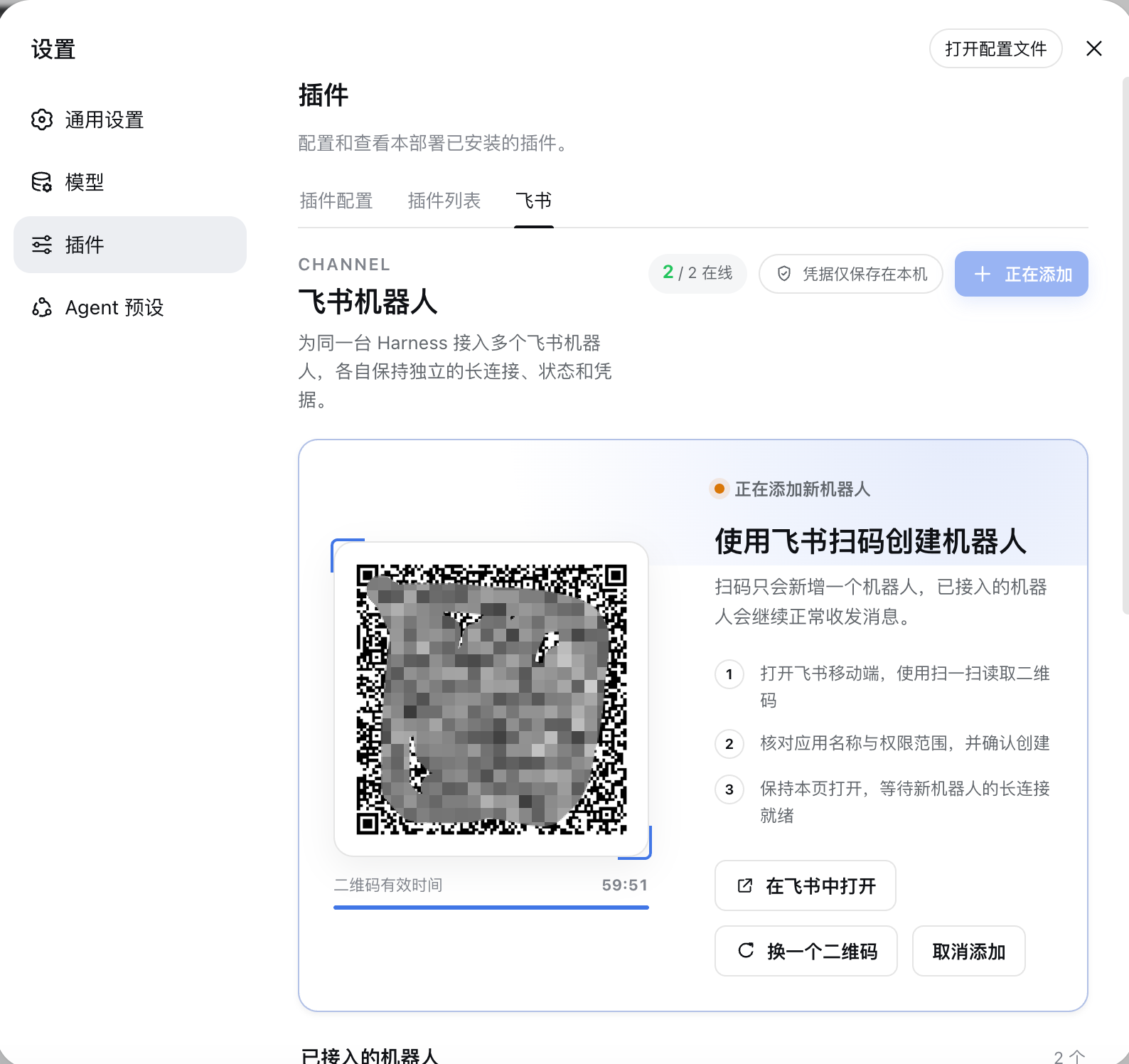
把一个或多个飞书机器人直接接入 DeepSeek Harness。安装插件后,在 Harness 的设置页扫码即可逐个创建机器人;每次确认完成并通过连接检查后,都能立即在飞书里与同一个 Harness 智能体连续对话。
界面预览
主要能力
- 在 Harness「设置 → 插件 → 飞书」内反复扫码添加多个机器人,无需手动复制 App ID 或 App Secret
- 每个机器人拥有独立凭据、飞书长连接、授权用户、会话映射和消息去重状态
- 单个机器人断线、重连或移除不会中断其他机器人
- 扫码用户自动成为首位授权用户,创建后即可私聊机器人
- 收到消息立即添加处理中 Reaction,成功或失败后更新状态
- 使用飞书 CardKit 原生流式卡片输出,失败时安全回退为普通文本
- 每个飞书会话映射到持久的 Harness 会话,支持多轮上下文
- 默认使用 Harness
standard智能体预设,包括网页搜索等工具能力 - App Secret 仅保存在 DSH Host 的凭据存储中,不进入浏览器、二维码或插件配置文件
安装
从 GitHub 一条命令安装:
npx -y github:xmanrui/dsh-feishu install
安装后重启 dsh web,打开「设置 → 插件 → 飞书」,点击「添加机器人」,再用飞书扫码确认。需要更多机器人时再次点击「添加机器人」即可;扫码只会新增,不会覆盖现有机器人。页面只有在以下条件全部满足后才把该机器人显示为“已连接”:
- 飞书应用创建成功;
- 凭据已安全保存;
- 机器人身份校验成功;
- 飞书长连接已建立;
- DeepSeek Harness Host 可访问。
连接成功后,在飞书中找到刚创建的机器人并发送消息即可。每个机器人都支持 /new、/status 和 /help。
本地开发
git clone https://github.com/xmanrui/dsh-feishu.git
cd dsh-feishu
npm install
npm test
npm run build
node bin/dsh-feishu.mjs install --source .
插件运行在 dsh web 的 Host 进程内,不需要再维护独立桥接服务。非敏感配置保存在 $DSH_HOME/integrations/dsh-feishu/,各机器人的会话状态彼此隔离;每个 App Secret 都由 Harness 的 credential provider 独立管理。
当前按 DeepSeek Harness 0.1.0-rc.6 的插件与 Connection RPC 接口开发。更新 Harness 后,建议先运行测试并验证设置页、扫码和消息收发闭环。
安全默认值
- RPC 仅允许本机 Harness 页面访问;
- 浏览器不能提交或读取 App Secret;
- 默认只接受扫码创建机器人的飞书用户消息;
- 机器人使用
standard工具集,但不会自动批准 Harness 的高风险操作; - 移除某个机器人会只停止它自己的长连接并清除它自己的插件凭据,不影响其他机器人;
- 重复扫码得到同一个飞书应用时会复用原机器人记录,不会产生重复接入。
旧版独立桥接
仓库仍保留 src/index.mjs 与 .env.example,用于兼容早期的独立进程部署。新安装优先使用 Harness 插件模式。
许可证
MIT
English
Connect one or more Feishu bots directly to DeepSeek Harness. After installing the plugin, you can create bots one by one by scanning a QR code in the Harness settings page. Once registration and connection checks succeed, each bot is immediately ready for continuous conversations with the same Harness agent.
Interface preview
Features
- Add multiple bots by repeatedly scanning QR codes under Harness → Settings → Plugins → Feishu, without manually copying an App ID or App Secret
- Keep separate credentials, Feishu long connections, authorized users, session mappings, and message deduplication state for every bot
- Reconnect or remove one bot without interrupting any other bot
- Automatically authorize the user who scans the QR code, so the bot is ready for direct messages immediately after setup
- Add a processing reaction as soon as a message arrives, then update it when the request succeeds or fails
- Stream replies through native Feishu CardKit cards, with a safe fallback to plain text
- Map every Feishu conversation to a persistent Harness session for multi-turn context
- Use the Harness
standardagent preset by default, including tools such as web search - Store every App Secret only in the DSH Host credential store—never in the browser, QR code, or plugin configuration file
Installation
Install from GitHub with one command:
npx -y github:xmanrui/dsh-feishu install
Restart dsh web after installation. Open Settings → Plugins → Feishu in Harness, click Add bot, and scan the QR code with Feishu. Repeat the same process to add more bots; a new scan never overwrites an existing bot. A bot is shown as Connected only after all of the following checks succeed:
- The Feishu app has been created;
- Its credentials have been stored securely;
- The bot identity has been verified;
- The Feishu long connection has been established;
- The DeepSeek Harness Host is reachable.
Once connected, find the newly created bot in Feishu and send it a message. Every bot supports /new, /status, and /help.
Local development
git clone https://github.com/xmanrui/dsh-feishu.git
cd dsh-feishu
npm install
npm test
npm run build
node bin/dsh-feishu.mjs install --source .
The plugin runs inside the dsh web Host process, so no standalone bridge service is required. Non-sensitive configuration is stored under $DSH_HOME/integrations/dsh-feishu/. Conversation state is isolated for each bot, and every App Secret is managed independently by the Harness credential provider.
The current version targets the plugin and Connection RPC interfaces in DeepSeek Harness 0.1.0-rc.6. After upgrading Harness, run the tests and verify the settings page, QR-code setup, and end-to-end messaging flow before deploying the update.
Secure defaults
- RPC endpoints are accessible only from the local Harness page;
- The browser can neither submit nor read App Secrets;
- By default, only the Feishu user who created a bot through QR-code setup is authorized to send it messages;
- Bots use the
standardtoolset but never auto-approve high-risk Harness operations; - Removing a bot stops only its own long connection and deletes only its own plugin credentials;
- Scanning the same Feishu app again reuses its existing bot record instead of creating a duplicate integration.
Legacy standalone bridge
The repository still contains src/index.mjs and .env.example for compatibility with early standalone deployments. New installations should use the Harness plugin mode.
License
MIT